Three is a Dance:
Why We Find Comfort in the Triad
Co-created with AI
Pattern, Perception, and Psychology
The Brain’s Pattern Recognition and the Triad
The number three holds a unique place in human cognition. Our brains are wired to seek out patterns—shapes, rhythms, ideas—and three is the smallest number that allows us to form a complete set. One is singular, two creates a duality, but three introduces a beginning, middle, and end—a sequence that feels full. This isn’t just poetic; it’s psychological. Studies in cognitive science show that triads are easier for the brain to recognize and retain (Cowan 58).
This idea is rooted in the concept of “chunking,” a memory strategy where small sets of information are grouped together to enhance recall. George A. Miller’s famous theory on working memory suggested we can comfortably hold about seven items in short-term memory, but more recent research places that number closer to four—and within that, triads are particularly efficient (Cowan 60). When grouped in threes, data becomes more digestible. We remember a list of three items far better than four or five, and that memory comfort shapes how we perceive meaning.
The third element in a group transforms it from duality to complexity. Two points make a line; three make a shape. In perception studies, participants were more likely to assign intentionality or story to three animated shapes on screen than to two, seeing relationships, hierarchy, and dynamics emerge from the triad (Scholl and Tremoulet 204). Our minds are drawn to threes not just for their rhythm, but for their potential to represent something whole.
The Rule of Odds and the Aesthetics of Asymmetry
In design, art, and even nature photography, the rule of odds—especially the rule of three—dominates composition. Arrangements with odd numbers, particularly three, are considered more visually interesting. Two objects create tension or symmetry that can feel static; three creates balance with motion. This effect is often applied instinctively by stylists and photographers to add visual intrigue (Lidwell et al. 148).
While two is often romanticized—pairs of lovers, two hands clasped—there’s a reason it can feel insufficient in collecting, storytelling, and composition. Pairs establish polarity: yes/no, black/white, this/that. But they don’t offer resolution. The third point creates narrative movement. This is why three is so prevalent in storytelling: conflict, crisis, resolution; beginning, middle, end; the three-act structure (McKee 33).
The principle is also formalized in the “rule of thirds,” a composition guideline that divides an image into three vertical and horizontal parts. Artists place focal points along these lines rather than at the center to make the piece more dynamic (Freeman 41). The human eye, it seems, finds pleasure not in perfect symmetry but in slight imbalance—what the rule of thirds offers through its triadic layout. Designers of everything from logos to living rooms employ this strategy because the odd group, and particularly the group of three, invites the eye to travel.
Even outside of visual design, product marketing exploits the triadic appeal. Consider slogans like “Just Do It,” “Snap, Crackle, Pop,” or “Reduce, Reuse, Recycle.” They stick not just because they rhyme or alliterate, but because three-part groupings are inherently satisfying to our auditory and cognitive systems (Graham 77). The triad isn’t just pleasing to the eyes—it resonates in the way we hear and remember language.
Incomplete Pairs and the Leap to Wholeness
From a psychological standpoint, dualities represent tension or opposition, but the third element enables synthesis. Carl Jung described this as the “transcendent function”—when the psyche struggles between two conflicting elements, resolution arrives only with the emergence of a third reconciling force (Jung 140). Three becomes the architecture of integration, rather than the wall of division that two constructs.
Even in casual collecting, two items can feel uncomfortably paired—almost competitive. A third breaks the standoff, turning two objects into companions rather than rivals. In that sense, three is what makes a collection feel intentional rather than accidental. It’s the point at which our minds stop seeing parts and start seeing a whole.


Culture, Story, and Spiritual Symbolism
Stories Told in Threes
From the earliest myths to modern cinema, humans tell stories in threes. The Three Little Pigs, Goldilocks and the Three Bears, and countless fairytales follow a rhythm where two attempts fail, and the third succeeds. This structure isn’t just tradition—it reflects deep narrative logic. The repetition sets expectations, and the third turn delivers closure (Booker 124).
Why does this triadic structure work so well? Linguists and psychologists point to the “rule of three” in rhetoric—a principle stating that ideas presented in threes are more persuasive, humorous, and memorable (Gallo 98). Consider: “Life, liberty, and the pursuit of happiness.” Or “Friends, Romans, countrymen.” These are not only poetic—they follow a cognitive groove that our minds readily accept.
Children’s stories exploit this rhythm, but adult literature and cinema also rely on it. The classic three-act play—setup, confrontation, resolution—is foundational to dramatic writing (Aristotle 26). Even comedic timing often depends on a rule of three: the first mention sets the pattern, the second builds expectation, and the third delivers a twist or payoff. Three, then, isn’t just comfort—it’s climax.
Sacred Triads and the Divine Pattern
Across global religions and mythologies, the number three is revered. In Christianity, the Trinity—Father, Son, and Holy Spirit—embodies God’s completeness. In Hinduism, the Trimurti unites Brahma (creator), Vishnu (preserver), and Shiva (destroyer) into a cosmic balance (Zimmer 87). The Ancient Egyptians worshipped the triad of Osiris, Isis, and Horus. Each represents a function, a stage, or a sacred relationship.
These triads do more than organize divine attributes—they symbolize wholeness and harmony. The mystic Pythagoreans called three the “first true number,” seeing in it not just math but metaphysics: the triangle was the simplest polygon, the first shape with an inside and an outside (Guthrie 121). For them, three stood for birth (1), unity (2), and then relationship (3)—a sacred architecture of becoming.
Buddhism, too, places central emphasis on three: the Three Jewels—Buddha, Dharma, and Sangha—are the foundation of the path. The recurrence of triads across belief systems speaks to a spiritual intuition that three completes what one or two cannot. Even the act of prayer or blessing often follows a triadic rhythm. We find holiness not in the pair, but in the synthesis.
Ritual, Superstition, and the Everyday Magic of Three
Beyond theology, three recurs in cultural rituals and superstitions. In many traditions, actions are repeated three times for emphasis or effect: knocking on wood thrice to ward off bad luck; lighting candles in threes; throwing salt over the left shoulder three times. These practices often stem from folklore but reflect something deeper—an internal sense that three affirms what one or two cannot.
In Japanese culture, the number three (三, san) is associated with life and vitality. In weddings, a popular custom called san-san-kudo involves three cups, sipped three times, symbolizing the union of two families and the creation of a new one (Reider 172). In Western weddings, vows often follow a triadic structure: “to love, honor, and cherish.” Rituals seek resonance, and threes deliver it.
Even in commerce and hospitality, three often defines experience: a “flight” of three wines; a tasting menu with three small courses. There’s a sense of balance without excess—the trio offers exploration and comparison without overwhelming. We come back to it, again and again, because it feels enough—and enough is sacred.


Metaphysics, Mathematics, and Meaning
Philosophical Threes: From Dialectics to Tao
Three isn’t just poetic or spiritual—it’s also philosophically foundational. Hegel’s dialectic unfolds in three parts: thesis, antithesis, and synthesis. In this model, every idea (thesis) meets its opposite (antithesis), and the conflict is resolved in a higher unity (synthesis). This triadic movement mirrors both narrative and consciousness (Hegel 55).
Similarly, Jung spoke of the “tertium non datur”—the third that is not given but emerges. This “third” isn’t a compromise between two ideas; it’s something new that transcends them. It is in three, not two, that true transformation happens (Jung 142). That’s why conflict often resolves in trinity—not in balance between opposites, but through the birth of a third path.
Eastern philosophies also reflect this structure. In Taoism, the Tao gives birth to one, one gives birth to two (yin and yang), and two gives birth to three, which gives birth to the ten thousand things (Laozi, ch. 42). This cosmology sees three as the source of multiplicity—not an end, but the beginning of creation. Where two defines contrast, three creates motion.
Geometry, Physics, and the Laws of Nature
Mathematically, three is foundational. It’s the first number to form a shape—a triangle. While a single point has no dimension and two points form a line, three points define space. The triangle is the base unit of all geometry and structure: from pyramids to molecules, bridges to computer graphics. It’s no accident that 3D rendering begins with triangles—they are the smallest units that create form (Stewart 93).
In physics, we live in a world of three spatial dimensions. Every object has height, width, and depth—three axes that allow us to orient and move. Our color perception is trichromatic: we see red, green, and blue, and every hue arises from that triad (Hurvich and Jameson 30). Even at the atomic level, the matter we know consists of three primary particles—protons, neutrons, and electrons.
This structural omnipresence of three reinforces our preference for it in art, language, and ritual. It’s not just culture—it’s embedded in reality. Our evolutionary, visual, and physical environments are shaped by the logic of three, and so it’s no wonder that our minds echo the same pattern in thought and aesthetics.
Collecting, Completion, and the Human Instinct
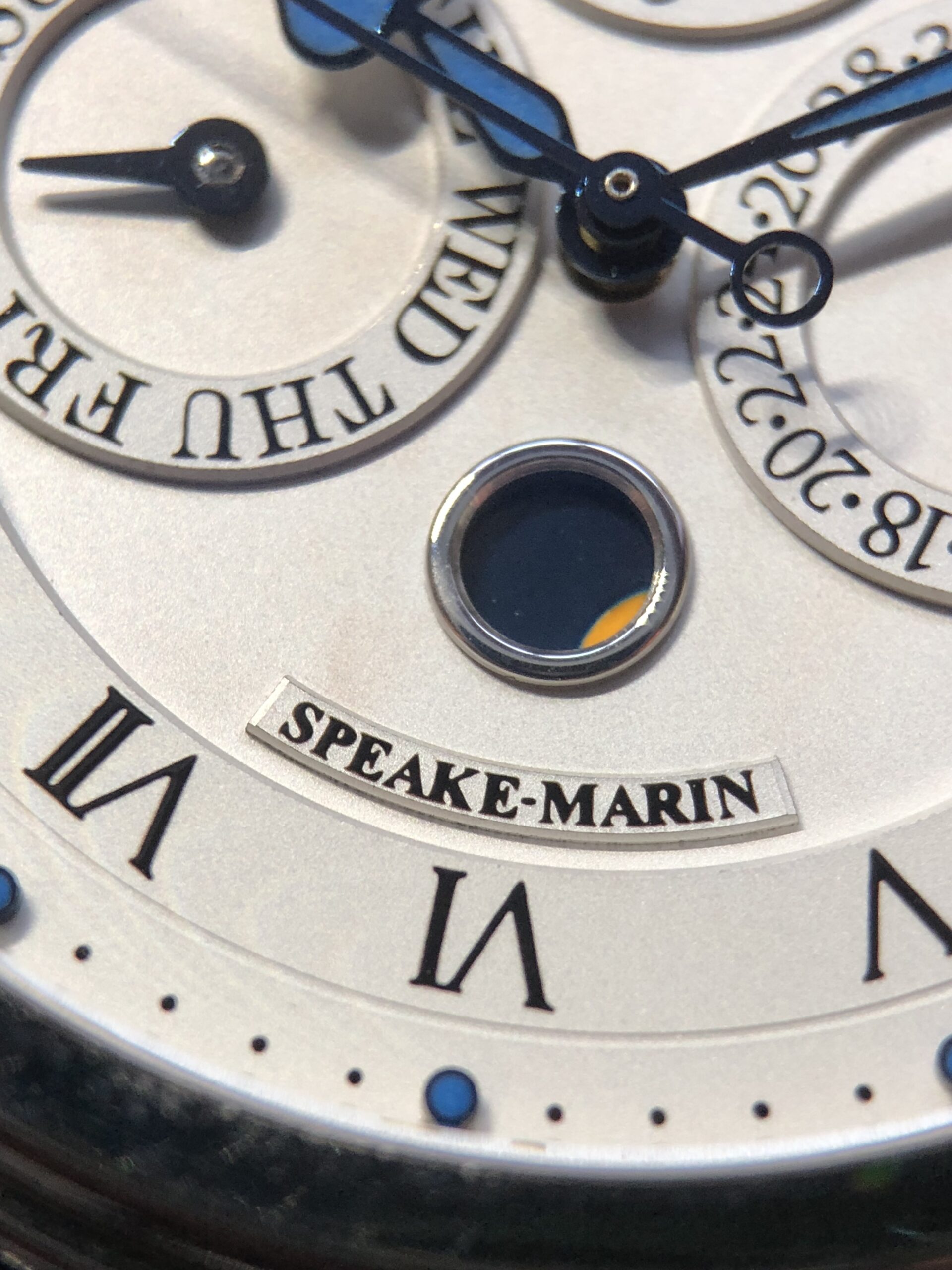
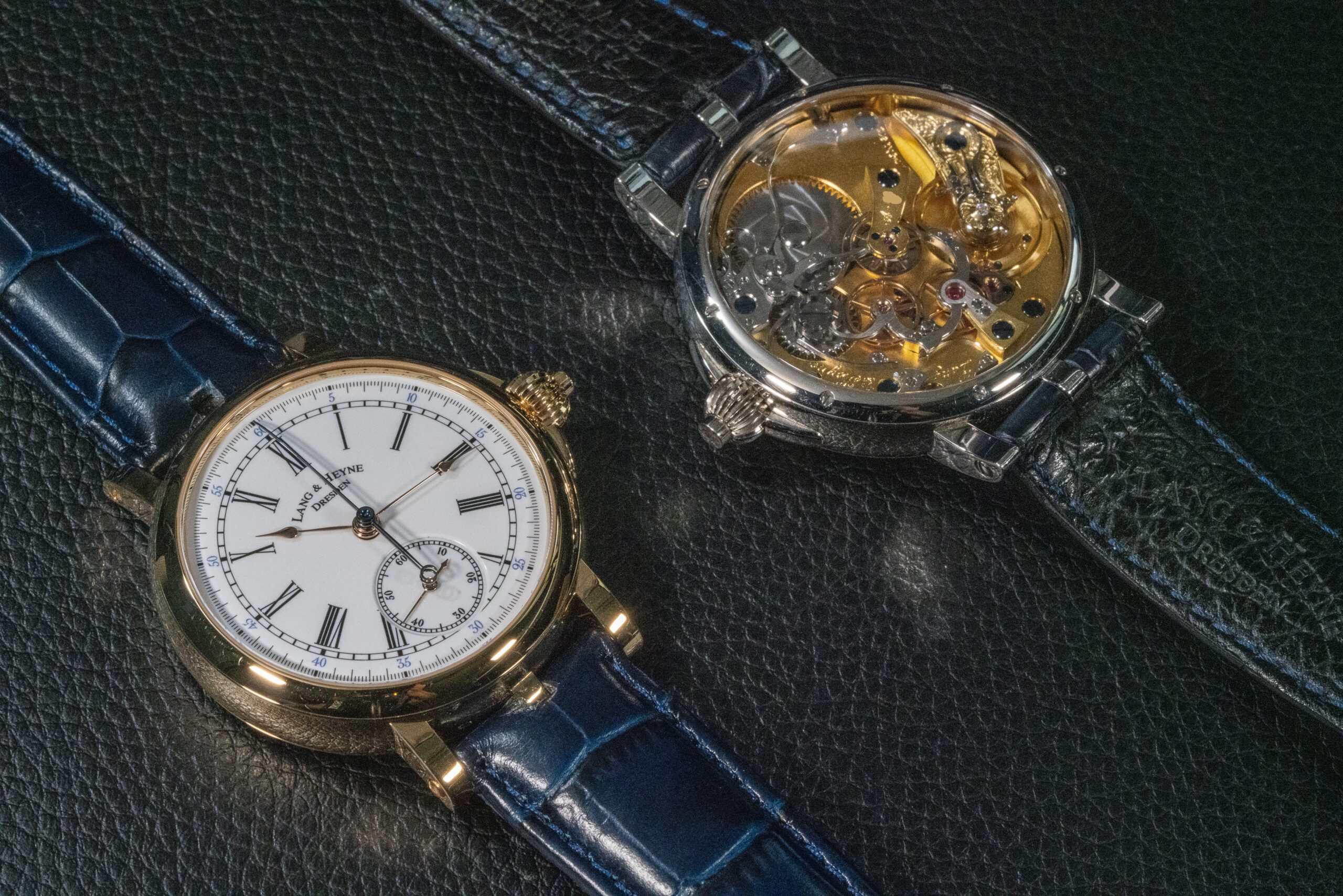
So why does three feel so right when we collect things—pens, artworks, ideas? Part of it is the visual harmony, the pattern our brain completes with three. But it’s more than just perception. It’s a psychological checkpoint. With three, we pass from curiosity into intention. Two items might be coincidence or convenience, but three signals care, theme, collection.
Moreover, odd numbers—particularly three, five, and seven—don’t allow symmetry, forcing our minds to engage more fully. But three has a scale and intimacy that five and seven begin to lose. It’s both whole and graspable. We see a trio and we sense story: one that anchors the past, present, and future of our attention.
In a world overflowing with choices and abundance, the number three cuts through noise. It signals enough: enough to compare, to connect, to feel a sense of completion. It is the number of harmony, not clutter. And perhaps, most importantly, it leaves space for wonder. One is alone, two is a pair. But three? Three is a dance.


Works Cited
Aristotle. Poetics. Translated by Malcolm Heath, Penguin, 1996.
Booker, Christopher. The Seven Basic Plots: Why We Tell Stories. Continuum, 2004.
Cowan, Nelson. “The Magical Mystery Four: How Is Working Memory Capacity Limited, and Why?” Current Directions in Psychological Science, vol. 19, no. 1, 2010, pp. 51–57.
Freeman, Michael. The Photographer’s Eye. Focal Press, 2007.
Gallo, Carmine. Talk Like TED. St. Martin’s Press, 2014.
Graham, George. Philosophy of the Arts. Routledge, 2005.
Guthrie, W.K.C. The Presocratic Philosophers. Cambridge University Press, 1962.
Hegel, G.W.F. The Phenomenology of Spirit. Translated by A.V. Miller, Oxford University Press, 1977.
Hurvich, Leo M., and Dorothea Jameson. “An Opponent-Process Theory of Color Vision.” Psychological Review, vol. 64, no. 6, 1957, pp. 384–404.
Jung, Carl Gustav. Psychological Types. Princeton University Press, 1971.
Laozi. Tao Te Ching. Translated by D.C. Lau, Penguin Classics, 1963.
Lidwell, William, et al. Universal Principles of Design. Rockport, 2003.
McKee, Robert. Story: Substance, Structure, Style and the Principles of Screenwriting. HarperCollins, 1997.
Reider, Noriko T. Japanese Demon Lore: Oni from Ancient Times to the Present. Utah State University Press, 2010.
Scholl, Brian J., and Pawan Sinha. “The Role of Structure in Shape Perception.” Cognition, vol. 72, no. 3, 1999, pp. 203–219.
Stewart, Ian. The Magical Maze: Seeing the World Through Mathematical Eyes. John Wiley & Sons, 1997.
Zimmer, Heinrich. Myths and Symbols in Indian Art and Civilization. Princeton University Press, 1946.