Addict, collector, curator
Co-created with AI
I never intended to become a collector—not consciously. But somewhere between finding myself with a tray full of MontBlanc Writers Editions and acquiring all three of the Sailor Ebonite Sculpture versions, I began to notice a pattern. When I find a pen I love, I want more than just one version. I want to explore its variations—same model in alternate finishes, sister designs from the same brand, materials that invite the eye and hand in unusual ways.
It didn’t take long to realize I was doing more than acquiring objects. I was creating order. Arranging them. Displaying them. Reflecting on why they spoke to me. The line between collecting and curating began to blur.
What drives this impulse—to accumulate, to organize, to make meaning from what we keep? Where does collecting end, and where might curating begin?

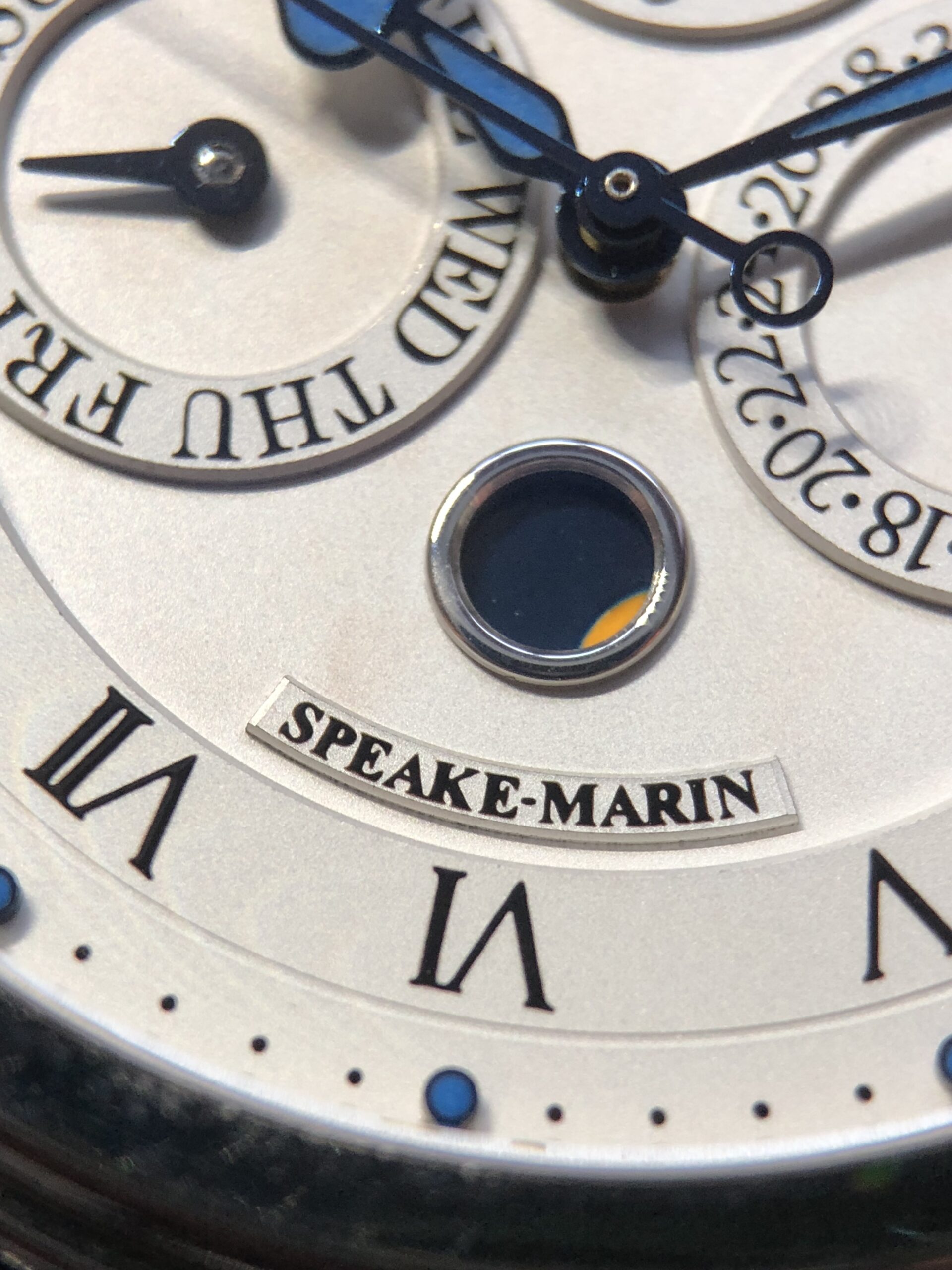
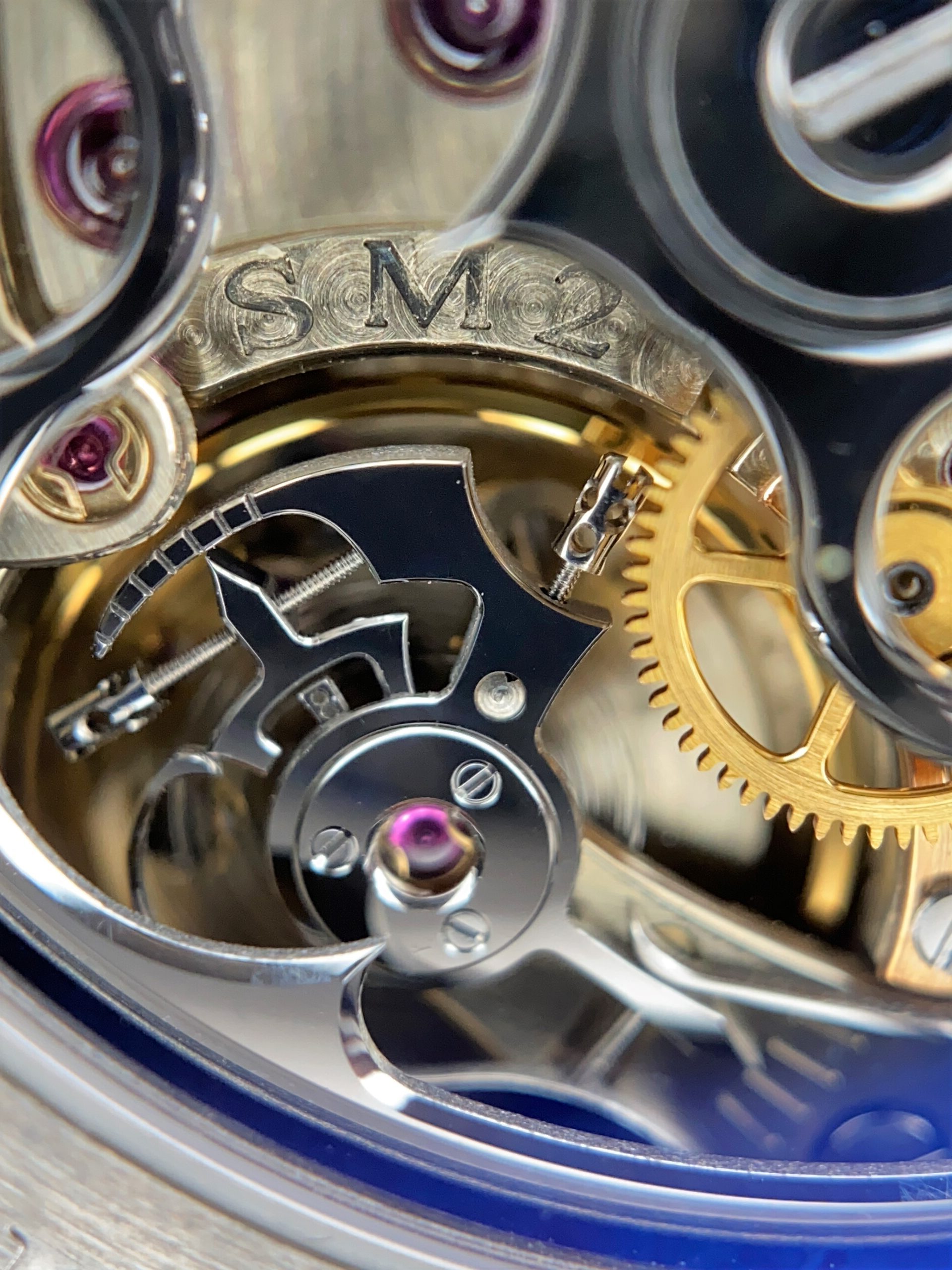
What we choose to collect often reveals how we process the world. For me, pens were the second objects (watches were first) that activated all my senses. Unlike purely visual art or purely functional tools, they live at the intersection of form, use, and memory. A good pen feels right before it writes well, and its value deepens over time—not just through ink laid down but through the shared experiences, patina of handling, the ritual of capping and uncapping, the rhythm of use.
Anthropologist Arjun Appadurai writes that objects gain social life when they circulate and are exchanged, but they gain emotional weight through how they’re used and touched in personal routines. For me, that physical intimacy is central. Pens are not observed—they’re handled.
Maybe this is why the beauty of a maki-e scene on a prized limited edition somehow feels like art on a unique canvas and less like a “pen”. Yes, it has texture, but as an effect of the technique, not as the initial design intent.
My collection speaks in textures first. Carbon fiber, Urushi lacquer, hammered silver, sculpted finishes—these are not materials one simply sees. They insist on being touched. They hold temperature. They respond to light. I don’t collect glossy trophies or hyper-functional workhorses. I collect surface and presence. My pens feel chosen not just for how they look, but for how they hold and return attention.

These preferences aren’t simply aesthetic—they’re deeply sensory, maybe even neurological (some may say I’m crazy). In Inside the Head of a Collector, neuropsychologist Shirley Mueller suggests collectors often favor objects that stimulate both tactile and emotional reward pathways, reinforcing attention and desire. I resonate with that. When I reach for a pen, I’m seeking a small act of sensory communion.
One might expect a pen collection to skew toward variety in size, ink delivery, or practical application. Mine tends toward a more architectural focus: how does the form hold together as an object? Does it speak in a cohesive voice from end to nib?
That question has led me—sometimes unconsciously—toward designs with no clip, hidden or integrated clips; trims that are whisper-light; uniformed design cross barrel and cap. I have a strong aversion to extraneous flourish. Gold trims or stock clips distract me. The pens I favor tend toward quietness, even in ornate materials. There’s integrity in restraint.
Design theorist Dieter Rams argued that good design is as little design as possible — “less, but better.”My preferences seem to align with that ethos: form and function merging into a kind of aesthetic clarity. I’m not chasing minimalism; I’m chasing unity.
The Nakaya Dorsal model is an obvious manifestation of this—the seamlessness, the uninterrupted curves, the “Zen-ness”. But so too is the Otto Hutt Design 08 with its stern Bauhaus design where parallel lines make the whole pen feel alive, even when at rest.


Several pens in my collection aren’t just physical tools or design statements—they’re narrative carriers. The Montblanc Brothers Grimm edition, for example, layers symbolism into material: oxidized finishes for the dark forests, finely etched motifs evoking fire and myth. It isn’t just beautiful—it’s literate. Many of the MontBlanc offerings carry this design ethos forward.

Another example: the Montegrappa Year of the Dragon pen, its engraved surface bearing Eastern symbology. These pens weren’t chosen for ergonomics alone. They represent belief systems, cultural memory, storytelling.

According to Susan M. Pearce, who wrote extensively on material culture and collecting, objects become deeply meaningful when they connect the personal to the collective—our own history to the world’s narratives. That describes exactly what these pens do. They become intertextual objects, echoing something larger than themselves. As an inspiring writer, the MontBlanc Writer’s Series in particular strikes a tone.
They’re not accessories. They’re references.
In some cases (many cases), I’ve bought multiple variations of the same model—not to complete a checklist, but to understand and explore the design through repetition. Sailor Wabi Sabi offers a good example. Owning several interpretations of the iconic pen over the three series offered and three colors made allows me to see how the same technique takes on different personalities.


With Visconti Homo Sapiens Lava bodies, I’ve seen how slightly different colors and materials change the pen’s voice. How bronze makes it vibrant, black more grounded. This is taxonomy. Design research. Exploration of form.
This type of collecting reflects what scholar Jean Baudrillard called the “system of objects”—a collection in which each item isn’t isolated, but functions as part of a code or taxonomy.In this system, the collector explores meaning by accumulating differentiated sameness.
It’s a kind of visual and tactile research. A slow-motion thesis, one pen at a time.
Over time, my instincts shifted. I was no longer asking “What else do I need?” but rather “What does this item add to the story I’m telling?”
That’s the curator’s pivot. Ruth Formanek’s foundational study on collectors describes a moment many collectors face: the turn from desire-driven acquisition to intention-driven editing. We begin asking what our collections mean, not just what they contain.
This happened to me when I realized I was housing pens I no longer admired, merely tolerated. Some had lost resonance. Others just “didn’t fit”. I began letting go—not as loss, but as refinement. This was hard as some already had associated memories or shared experiences.
The result? A collection that breathes. That says something coherent. Not trays of beautiful chaos.
Here’s how I distinguish the two roles I now inhabit:
- The collector is governed by desire and discovery. They expand the field.
- The curator is governed by memory and meaning. They shape the field.
Neither is “better.” In fact, they need each other. Without collecting, there’s nothing to curate. Without curating, collecting becomes chaos.
This duality reflects Csikszentmihalyi and Rochberg-Halton’s idea that people form identity by investing meaning into objects, organizing them into personal systems of order. My pen collection is that system. It mirrors how I see value, how I organize beauty, how I trust my hand.
The collection isn’t broad. It’s tuned. Each pen earns its place—not by novelty, but by resonance.
As Shirley Mueller notes, mature collectors shift from quantity to symbolic meaning. That’s where I live now. Curating isn’t just editing—it’s authorship.
Yet I wrestle with this: Is this still joy? Or have I made it habit? Addiction? Work?
Veblen’s theory of conspicuous consumption holds that we often buy not for function, but to display cultural capital. Behavioral economists document compulsive buying disorder as an impulse fueled by emotion regulation, social identity, and the reward system. We buy to soothe, to belong, to validate ourselves.
I’ve done it. A rough week. FOMO around a limited edition hard to find. The dopamine hits. But were those pens curated—or impulse?
Plato warned that when appetite overtakes reason, we serve our things instead of being served by them. Baudrillard pushed further: consumer culture feeds us representations, not reality. Collecting becomes simulation when we forget why we began.
I continue to collect. But I collect more slowly, more deliberately. Each addition must earn its place. It must say something in the language my collection speaks.
Conclusion
If collecting is about having, and curating about understanding, then the balance is this: choose what you keep, and know why you’ve kept it.
Right now, the pens still speak to me. I resist more than I indulge. I curate more than I collect. That, to me, is awareness. Not immunity—but clarity.
My pens aren’t about possession. They’re about reflection; Tactile ideas; Embodied values; Recorded memories; Celebrated uniqueness – Mine and the pens’.
Referenced Materials
Appadurai, Arjun, ed. The Social Life of Things: Commodities in Cultural Perspective. Cambridge UP, 1986.
Mueller, Shirley M. Inside the Head of a Collector: Neuropsychological Forces at Play. Lucia Marquand, 2019.
Rams, Dieter. “Ten Principles for Good Design.” Braun, 1980.
Pearce, Susan M. On Collecting: An Investigation into Collecting in the European Tradition. Routledge, 1995.
Baudrillard, Jean. The System of Objects. Translated by James Benedict, Verso, 1996.
Formanek, Ruth E. “Why They Collect: Collectors Reveal Their Motivations.” Journal of Social Behavior and Personality, vol. 6, no. 6, 1991, pp. 275–286.
Csikszentmihalyi, Mihaly, and Eugene Rochberg-Halton. The Meaning of Things: Domestic Symbols and the Self. Cambridge UP, 1981.
Stewart, Susan. On Longing: Narratives of the Miniature, the Gigantic, the Souvenir, the Collection. Duke UP, 1993.
Veblen, Thorstein. The Theory of the Leisure Class. Macmillan, 1899.
Kellett, Stephen, and Rod Bolton. “Compulsive Buying: A Cognitive–Behavioural Model.” Clinical Psychology & Psychotherapy, vol. 16, no. 2, 2009, pp. 83–99.
Müller, Axel et al. “Compulsive Buying: Features and Treatment.” CNS Spectrums, vol. 19, no. 4, 2014, pp. 289–298.
Roberts, James A., and Chris Manolis. “Compulsive Buying Behavior and Quality of Life: An Exploratory Investigation.” Journal of Consumer Affairs, vol. 46, no.